
On this page...
Register your ISTEP Chapter here.
Apply to join the youth Council here.
Back to topWho We Are
Led by students and supported by adults, ISTEP is a statewide movement made up of young people in grades 7 through 12 across the state of Iowa. The ISTEP program is held within the Division of Behavioral Health at Iowa Health and Human Services. ISTEP encourages youth to make friends, make a difference and become leaders.
Learn about ISTEP chapters and leadership
Back to topProgram Structure
Back to topResources and Outreach
List items for ISTEP Resources and Outreach
- ISTEP Expansion Announcements Recording FY27
- ISTEP Stream - Expansion Announcement Flyer FY27 (136.72 KB) .pdf
- ISTEP Chapter Funding Opportunity Application (64.25 KB) .docx
- ISTEP Digital Toolkit Flyer (38.06 KB) .pdf
- ISTEP Digital Toolkit Descriptions (635.39 KB) .pdf
- Chapter Advisor Stipend Participation Agreement (57.22 KB) .docx
- Chapter Advisor Stipend Checklist Tool (48.62 KB) .docx
Chapter Guidance
- ISTEP Resource Guide (464.85 KB) .pdf (FY27)
- Nicotine Free Schools Toolkit (51.29 MB) .pdf
- ISTEP Order Form (3.84 MB) .docx : Free promotional items for registered chapters to use at outreach events.
- ISTEP Youth Code of Conduct and Participation Form (525.98 KB) .docx
- Chapter Meeting Attendance Log (72.35 KB) .docx
- Team Building Activity Guide (44.64 MB) .pdf
Promotional Materials
- My Making a Difference Journal (30.22 MB) .pdf
- Vaping VS Reality Brochure (3.34 MB) .pdf
- Iowa Youth Tobacco and Nicotine Use (192.96 KB) .pdf
- ISTEP Difference Makers Poster 8.5x11 (5.37 MB) .pdf
- ISTEP Difference Makers Poster 11x17 (9.12 MB) .pdf
- ISTEP Tackling it Together Poster 8.5x11 (1.39 MB) .pdf
- ISTEP Tackling it Together Poster 11x17 (2.77 MB) .pdf
- ISTEP is a Movement Poster 8.5x11 (4.66 MB) .pdf
- ISTEP is a Movement Poster 11x17 (4.74 MB) .pdf
- MLMQ Take Control Poster 8.5x11 (209.59 KB) .pdf
- MLMQ Take Control Poster 11x17 (205.04 KB) .pdf
| Name | Logo |
|---|---|
| Basic Black |

|
| Basic Grey |

|
| Basic White |

|
| Horizontal Black |

|
| Horizontal Grey |

|
| Horizontal White |

|
| Vertical Black |

|
| Vertical Grey |

|
| Vertical White |

|
Recorded Webinars
- Building Partnerships with Youth: Where Do You Start? (April 2026)
- Authentically Engaging Youth in Tobacco Control During COVID (February 2022)
Presentation Templates
- Let's Make Healthy Choices (August 2026)
- Outsmart Smart Vapes
Share pictures and videos from your chapter's street marketing events by tagging ISTEP.
- Facebook - Facebook.com/IowaSTEP - @IowaSTEP
- Instagram - Instagram.com/IowaSTEP - @IowaSTEP
- Campaign for Tobacco Free Kids
- Healthiest State Initiative
- Iowa Students for Tobacco Education and Prevention Website
- Iowa HHS Model Tobacco Free and Nicotine Free Policies
- Iowa Smokefree Air Act
- My Life My Quit
- Smoke Free Housing
- The Real Cost Campaign
- Truth Initiative
- Your Life Iowa
- Youth Engagement Alliance
- 988 Suicide & Crisis Lifeline
Events
Back to topDigital Toolkits
List items for Digital Toolkits
Each year the youth ISTEP Council plans digital toolkits to support registered chapters in hosting local outreach efforts throughout the year. Implement the digital toolkits to keep current members engaged, recruit new members, and talk to peers and community members are what is important to you. These toolkits encourage youth chapter members to expand personal leadership skills, while positively influencing others.
To learn more about this year’s digital toolkits, view the flyer and read the descriptions of the toolkits within the specific toolkit sections below.
As your chapter completes outreach activities, let us know about it by tagging @IowaSTEP on Facebook or Instagram, or by submitting the ISTEP Outreach Events and Activities form.
Use the Iowa Nicotine Free Schools Toolkit to strengthen your school’s tobacco and nicotine free policy and promote supportive alternatives to suspension.
Why It Matters
A 100% comprehensive tobacco and nicotine free policy creates healthier learning environments. The Iowa Nicotine Free Schools Toolkit helps effectively implement, clearly communicate, and enforce a fully tobacco and nicotine free campus while also guiding schools toward supportive, educational responses instead of suspension.
How Teens Can Lead
- Step 1 – Engage Peers
Team up with ISTEP members, student groups, clubs, and friends to support policy improvements. - Step 2 – Research
Learn the importance of comprehensive tobacco and nicotine free policies and alternatives to suspension by reviewing key sections of the toolkit. - Step 3 – Assess
Compare your school’s current policy with the model policy and model disciplinary matrix guidance to identify gaps. - Step 4 – Advocate
Share the need for an updated policy with peers, administrators, and school board members. Use informal conversations, tabling events, or a short presentation to highlight the benefits of strong policies and alternative measures. - Step 5 – Pass a Policy
Submit the updated policy by clicking this link and order free signage from Iowa HHS by emailing [email protected]. Celebrate your hard work and enjoy a fully tobacco and nicotine free school with supportive disciplinary practices.
Refer to the Iowa Nicotine Free Schools Toolkit (51.29 MB) .pdf for more details and further guidance.
Outreach Ideas
- Pre-policy change
- Interactive, educational table with poster boards, games, stickers or buttons to gain support.
- A pledge wall to demonstrate student support.
- Post-policy change
- Advertisements or stories in local newspapers to highlight policy updates.
- Celebration for recognizing the policy change.
- An annual awareness event to remind students, school staff, and community members of its policy.
Material Ideas
- Supplies to support the outreach ideas listed above.
- Printing materials: copies of the updated policy, flyers, posters, or letters to staff and parents.
PROPEL (Promoting Resilience, Outreach, Prevention, Education, and Leadership)
PROPEL is a youth‑led curriculum designed to expand access to substance use prevention education for middle school youth. Created by a youth ISTEP Council member with guidance from the Iowa State University Prevention Science Institute, PROPEL gives teens research‑informed tools to help peers make safe, healthy choices.
PROPEL can be implemented during a single 60-minute presentation or broken into two 30-minute presentations. Utilize the Facilitator Guide for further details, including optional additional activities.
Why It Matters
Substance use prevention is strongest when it starts with teens supporting teens. PROPEL helps build confidence and skills to keep yourself and your friends safe—while creating a healthier school community.
Participants Will Learn:
- Strong decision‑making skills
- Clear communication strategies
- How to recognize risky situations
- Skills to confidently say “no”
- Ways to safely handle or exit dangerous situations
- Leadership skills that support positive youth outcomes
How Teens Can Lead
- Bring PROPEL to your school to empower peers to make safe, informed choices.
- Implement the PROPEL curriculum to middle school students in your school district.
- Lead an outreach event to support the curriculum.
Outreach Ideas
- Create posters or handouts with tips for staying safe and substance‑free.
- Share PROPEL messages on social media or school newsletters.
- Host an interactive table with educational materials, poster boards, or games at your middle school.
- Create a pledge wall for middle school students to sign to commit to being substance free.
- Host a bracelet making event with resources cards available (see Facilitator Guide).
Material Ideas
- Supplies to support the outreach ideas listed above.
- Printing of curriculum materials.
- Promotional materials that support the curriculum.
Presentation Documents
Create a cozy tie blanket for someone in need in your community. Add a positive mental health message with helpful resources and then attach the card to the tie blanket with a safety pin before donating.
Why It Matters
Your tie blanket offers warmth, comfort, and hope to someone who may be struggling. Sharing positive messages helps reduce stigma, encourages others to reach out for help, and shows your community that teens care. Small acts of kindness support mental wellness—for you and the person receiving the tie blanket.
Positive Message Card Example:
You matter. Your feelings are real. Asking for help is strong.
You’re not alone—there are people and resources ready to support you.
- 988 Suicide & Crisis Lifeline – Call or text 988 or chat 988lifeline.org
- Your Life Iowa – Call (855) 581-8111, text (855) 895-8398 or chat yourlifeiowa.org
How to Make a Tie Blanket:
- Place two fleece fabric pieces together and line up the edges.
- Cut a 4‑inch square from each corner.
- Cut 1‑inch‑wide, 4‑inch‑long strips around all four sides.
- Tie each pair of strips (one from each layer) in a double knot.
- Continue around all sides until the tie blanket is completely tied together.
- Attach your message card using a safety pin.
How Teens Can Lead
- Choose where the tie blankets will be donated.
- Plan a tie blanket‑making event with ISTEP members and peers.
- Talk with friends about why supporting mental health matters.
- Deliver the finished tie blankets together as a team.
Outreach Ideas
- Invite peers to join the tie blanket‑making session and talk about kindness and mental health.
- Share information about mental health resources while making the tie blankets.
- Highlight the project through school announcements or social media.
Material Ideas
- Supplies to support the outreach ideas listed above.
- Advertisements or stories in local newspapers to highlight the project. Include mental health resources.
- Celebration materials to recognize your group’s effort.
- Tie blanket supplies:
- Fleece fabric
- Scissors
- Tape measures
- Safety pins
- Printed positive messages/resources cards
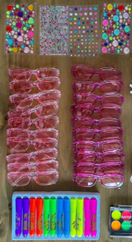
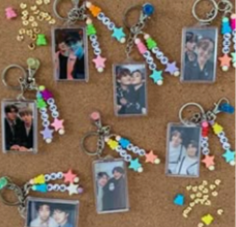
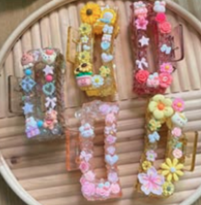
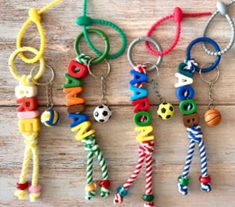
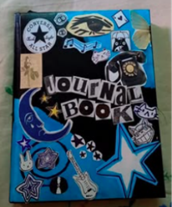
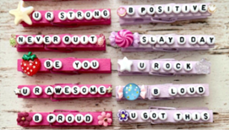
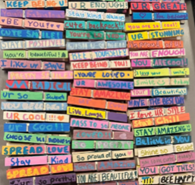
Create fun, positive items—like journals, picture frames, hair clips, sunglasses, bookmarks, bracelets, keychains, and decorated clothes pins—using bedazzling gem kits and bead art. Add anti‑bullying quotes or uplifting messages to inspire kindness and courage in your school. Let’s make kindness sparkle—one creative piece at a time!
|

|
|
|---|---|---|
|
|
|
Why It Matters
Bullying hurts people emotionally, mentally, and socially. Your art can help change that. When you share positive messages, you’re reminding others they belong, encouraging kindness, and showing your school that standing up against bullying is something everyone can do. Small acts of positivity help create a safer, more welcoming environment for all students. Little acts of kindness shine big.
How Teens Can Lead
- Choose items to decorate.
- Add gems, beads, stickers, or bright colors.
- Write or attach an anti‑bullying quote or positive message.
- Give your creation to someone or display it at school.
- “Clip” decorated clothes pins with messages onto backpacks, lockers, or bulletin boards to spread kindness quietly but powerfully.
Outreach Ideas
- Host a table or event with ISTEP members where students can decorate items.
- Talk with peers about bullying prevention and how kindness makes an impact.
- Share mental health resources while creating or handing out the items.
- Create Kindness Clips and plan a week (Homecoming week, Red Ribbon Week, etc.) to “clip” peers with decorated clothes pins.
- Examples:
|
|

|
|---|
Material Ideas
- Supplies to support the outreach ideas listed above.
- Advertisements or stories in local newspapers to highlight the project. Include mental health resources.
- Celebration materials to recognize your group’s effort.
- Items to decorate (journals, cups, hats, picture frames, hair clips, sunglasses, bookmarks, clothes pins).
- Art supplies:
- Bedazzling gem kits
- Beads
- Glue
- Markers
- Stickers
|

|
|
|---|
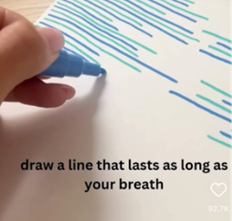
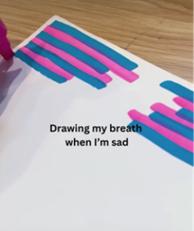
Feeling anxious or overwhelmed? Burnt out or having trouble focusing? Draw Your Breath is a simple activity and coping tool that combines breathing with art to help calm anxious feelings and thoughts. Your inhale and exhale guide the lines you draw, helping you slow down, focus, and feel more grounded.
Why It Matters
Anxiety is common among teens, and having easy, healthy coping tools makes a big difference. By teaching this to friends, you help create a more supportive school environment where everyone feels cared for and understood.
Draw Your Breath:
- Slows your thoughts and breathing.
- Shifts your body into a calmer state.
- Helps you stay focused on the present instead of feeling anxious.
- Builds mindfulness and grounding.
- Expresses yourself creatively without pressure.
How Teens Can Lead
- Notice your breathing.
- Inhale: draw a line, shape, or mark.
- Exhale: change the direction, style, or pattern.
- Continue for a few minutes, letting your breath set the pace, and guide your art.
- Try continuous lines, layered shapes, or freestyle patterns.
Outreach Ideas
- Host a “Calm Corner” during lunch or study hall where students can try the activity.
- Set up a mindfulness art table at school events, club fairs, or wellness weeks.
- Share Draw Your Breath instructions on posters or small handouts.
- Lead a short, guided session at ISTEP meetings and invite other clubs.
- Offer a “Brain Break” booth during finals week or state testing.
- Partner with school counselors for mini‑workshops.
- Display anonymous student art from the activity to inspire others.
Material ideas
- Supplies to support the outreach ideas listed above
- Art supplies: paper, pencils, markers, paint, and brushes (or any other drawing tools)
Help make your school a place where everyone feels supported. The Green Bandana Project (TGBP) is a student-led movement that boosts mental health awareness and encourages students to look out for one another. After a short training, students carry resource cards and tie a green bandana on their backpack to show they’re approachable, informed, and ready to support peers who may be struggling. TGBP materials are geared for high school youth.

Why It Matters
- Helps reduce stigma and encourages open, comfortable conversations about mental health.
- Shows students they are not alone and that there are peers ready to listen.
- Encourages early help‑seeking, which can prevent crises.
- Helps students learn how to recognize warning signs and respond safely.
- Builds a more connected, supportive school community where kindness and awareness are part of everyday life.
- Creates a supportive group of trained peers who promote mental wellness and encourage others to reach out.
How Teens Can Lead
- Complete a short mental health awareness training online through TGBP.
- Learn warning signs and safe ways to support friends.
- Take the pledge to look out for others and reduce stigma.
- Carry resource cards with crisis support resources.
- Tie a green bandana to your backpack to show you’re a safe, supportive person for peers to talk to.
Outreach Ideas
- Host a TGBP training session during an ISTEP meeting and invite other clubs.
- Set up an informational table during lunch or school events.
- Create posters, social media posts, or short announcements explaining TGBP.
- Organize a “Green Bandana Day” where trained students kick-off wearing or displaying their bandanas.
- Partner with counselors to offer mini‑workshops on how to support friends in need.
- Create a pledge wall where students can sign their commitment to supporting mental health.
- Hand out resource cards and encourage peers to learn about crisis resources and support services.
- Display stories, quotes, or artwork about kindness, support, and mental health awareness.
Material Ideas
- Supplies to support the outreach ideas listed above
- Green bandanas
- Mental health resource cards
- Suicide prevention gatekeeper training
- Printing materials: posters, flyers, pledge cards, and sign‑up sheets
- Table setup materials: tablecloth, sign holders, and display boards
- Stickers, buttons, or bracelets promoting mental health awareness
- Markers, tape, and crafting supplies for pledge walls or awareness displays
Learn More at:
PhotoVoice is a project where you use photos to share your thoughts, experiences, or things you care about to tell a story. You take pictures that show what’s going on in your life, school, or community, and then you talk about what those photos mean to you. It’s a creative way to express your voice, help others understand your point of view, and bring attention to things that people might not notice otherwise.
Why It Matters
PhotoVoice gives people a real way to be heard. By taking photos that show their experiences and feelings, individuals can share what life is like from their point of view. It helps them express themselves, build confidence, and bring attention to things they want others to notice. Their photos can spark conversations, create understanding, and even inspire positive changes in their school or community.
How Teens Can Lead
- Step 1 - Learn and Explore
- Learn about PhotoVoice research projects at photovoice.org
- If your chapter completes this project in the fall, you might be able to join a free virtual training. Email [email protected] for more information.
- Talk about how photos tell stories
- Learn about PhotoVoice research projects at photovoice.org
- Step 2 - Plan Your Project
- Decide what you want your story to say
- Practice explaining the project
- Learn how to use disposable cameras, if applicable
- Step 3 - Take and Organize Photos
- Take photos that show your point of view
- Organize your photos in a binder
- Decide if you need more photos to complete your story
- Step 4 - Create Your Story
- Choose the photos for your exhibit
- Write short descriptions to go with them
- Step 5 - Prepare Your Exhibit
- Plan the exhibit (what, where, when, how, etc.)
- Decide who to invite
- Make and send invitations
- Step 6 - Share and Reflect
- Hold your exhibit
- Listen to reactions and feedback
- Celebrate your work
- Reflect on what you learned
- Think about next steps and future plans
Outreach Ideas
- Host an exhibit of your groups’ stories. Invite peers, school staff, school board members, and/or community members. Think about how to make the exhibit fun and interactive.
- Talk to teachers at school to see if they’d like to offer this as a class research project.
- Host a PhotoVoice Day for peers to learn and experience it themselves. Provide them disposable cameras to share their own story. Provide a hallway or bulletin board to display their stories.
- Present your story to the school board members to inspire a policy change.
Materials Ideas
- Supplies to support the outreach ideas listed above
- Binders
- Disposable cameras and film development
- Printing materials: invitations, photos, and photo descriptions
- Exhibit supplies: tablecloths, poster boards,
- Poster board art supplies: tape, washi tape, markers, and stickers
Learn about ISTEP chapters and leadership
Back to top